
Now, we have talked briefly in a previous blog about our experiences at Rescate Sanctuary. But after recently reflecting on our blog, it’s apparent that we didn’t go into much detail of what each activity looked like.
Now, if you haven’t read the blog it would be a great read before reading this one to understand where we went and the type of volunteering we were apart of. Make sure to check out the blog here.
This Blog will be more in-depth on each activity and what a typical day would look like and how beneficial the whole experience is for you!
Visit Rescate Wildlife Sanctuary for yourself- book it here!
Also, check out our latest YouTube Mukbang where we talk about our Volunteering experience!
*This post contains affiliate links, which we may earn from. This does not come at an additional cost, but helps us to pursue this dream 🙂
- Day-to-Day Activities at Rescate Wildlife
- Overview of volunteering at Rescate
- Want help planning your Costa Rican adventure?
- Our favourite must-needed travel resources
- Our Top Traveller’s Essentials
- Thank you for reading our Rescate Volunteering Abroad guide!
Day-to-Day Activities at Rescate Wildlife
To start with, let’s talk about the day to day activities. Generally they would follow a simple order of working hours from 8am – 3pm/4pm with some deviances dependant on activities.
Feeding Route
If you have drawn the short straw (so to speak), you may have to start the day around 6:30am/7am for the feeding round. This happens routinely once a day as all the animals need feeding in the morning. This is done early as all the animals normally wake up around this time for feeding.
This task is usually 1/2 volunteers along with a ranger who goes around to each animal and provides them with the right amount of food. Now, with this being a large sanctuary this will take a few hours and will require different foods to satisfy the diversity at the sanctuary. You will be tasked to prepare the food (fruits mainly) for specific animals before taking off to feed. The group will have a wheelbarrow’s worth of food which will be taken around the park and each diet will be feed one by one.
As the majority of animals require a fruit diet, this is the one that takes the longest as the monkeys, peccaries, all the farm animals, birds, reptiles, mammals and more require the fruit! Each enclosure will be approached and fed the correct amount of food according to the number of animals and type of animal.
This is a fun experience as many of the animals are into a routine of knowing when it’s feeding time so they become excited at your presence. For the simple animals to feed, you may be tasked to hand the food out but of course keeping a safe distance and placing the food in the correct area of the enclosure.
Then you have the meat eaters, so basically all of the felines/canines plus the odd animal like the Greater Grison (worth googling if you don’t know them! They are like a ferret or a weasel).
These animals are fed raw meat, usually chicken or darker meats similar to what they would eat in the wild. This is an opportunity to get up close with the larger predators and understand the sheer dominance and power of these animals.
For anyone who is looking to use this towards their career aspirations to be a vet or go into animal care, then this is a great opportunity to ask questions and understand more.
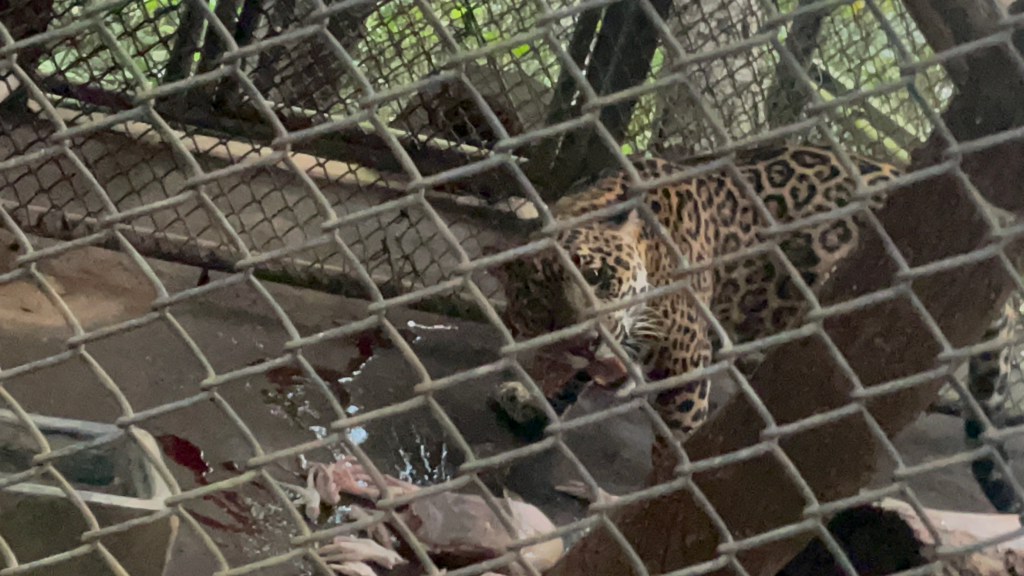
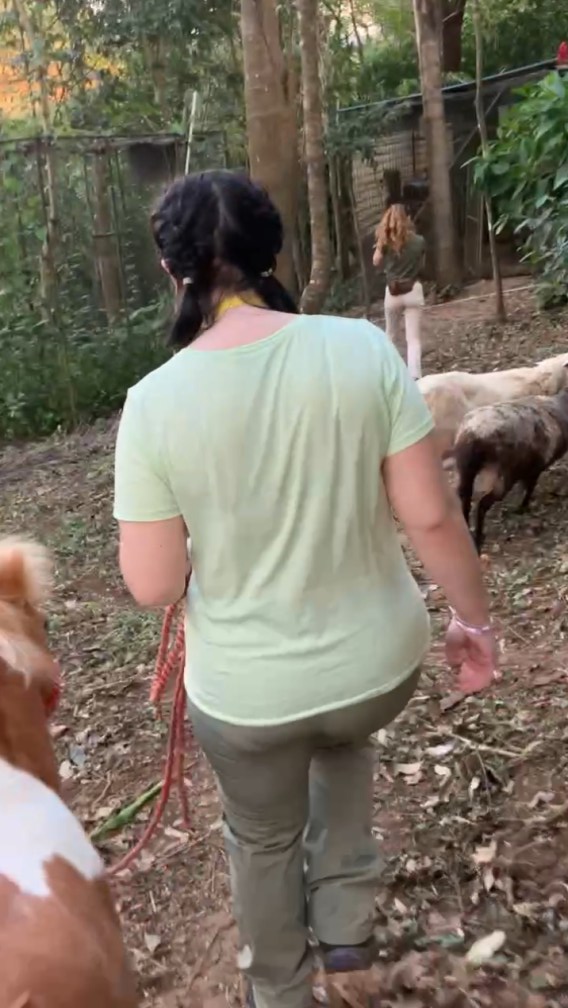
Please note that the animals aren’t kept in small cages- the jaguar for example came to an area for food but was free roam in his very large enclosure!
Observation
Observation may be seen as quite a boring part of your day and one that not many look forward to. However, once you understand the reasons for it, it can be very insightful and help you know more about each species individually.
The observation is exactly what it says on the tin. You are there to observe a select animal or species to see it’s usual or unusual movements and activities in a typical hour of the day. Now, the observations change each day depending on the research of the rangers but when we volunteered it was usually the grey fox, coyote’s or the squirrel monkeys.
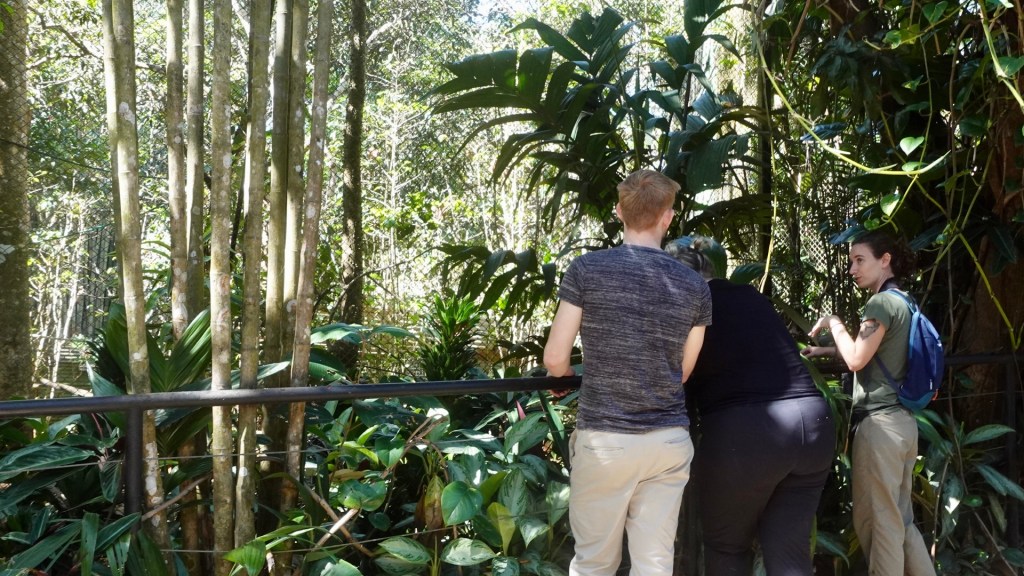
The observation would usually include 2 – 4 volunteers with one ranger to oversee the project and is used on tablets provided by the sanctuary to note down all the information. Each species had a different enclosure so you would be required to take note of the following: location in the enclosure, what they were doing, and maybe even how high were they (this is for the monkeys). This was recorded every minute on the minute for 30 minutes.
The Coyote’s for instance were pretty simple to monitor as they usually sleep most of the day and all you have to do is make sure you are monitoring the right Coyote… This can be difficult. As we remember it, there are 4 different Coyote’s, being Vinni Van, Bugs, Yep, and another one we cannot remember at all.
The Coyote’s had specific features including one with a poorly eye, or one with part of it’s ear missing. This is important to recognise who is who when observing their behaviours.
As it’s an enclosure, you will be observing from a distance and therefore might not have full visibility. This is very obvious in the monkey enclosure with the trees and leaves constantly blocking your view.
Observation is imperative to see how the animals are interacting with each other and if they are acting normal. It’s important as they are in an enclosure and the aim is to minimise the stress for each animals so doing this can allow the rangers to reduce stress if required.
Animal Enrichment
Animal Enrichment is where you are tasked to create different ‘toys’ that help with their cognitive function. Being in an enclosure is the best place for them but even they can get bored being limited to a space. However, this is the best place for them as they cannot be re-released so they need occupying.
The best way to do this is by making natural games/toys for the animals to enjoy. Enrichment is usually measured by how much they interact with the object.
Below we have provided some examples of the enrichments we made:
- Rope and Bamboo Ladder
This was made using large bamboo sticks that were cut down to 2 feet long bars. We used roughly 6/8 of them which we lined up and used large lines of rope which we weaved through the bamboo holes (created by drilling on either end). This was then all attached and could hold a significant amount of weight. This is perfect as this bamboo rope ladder was made for large spider monkeys which can weigh up to 5 kg.
So it is important to make a sturdy, resilient bamboo ladder that will not sway too much and hold up the monkeys as they swing.

- Monkey Puzzles
This is a log that has a few holes drill out of it so that you can stash small treats in for the monkeys to find. As the monkeys are really smart, it’s important to hide the prize using natural materials like hay or feathers. The monkey’s are used to this enrichment so find this easy so it’s important to keep their brain working so to make it harder, you can wedge a branch in the gap which is stiff and hard to pull out. The monkey will learn that in order to get the treat they will need to find a way into the gap.
The monkey will finally remove the sturdy stick from the gap and rummage until they have found the sweet treat! It’s such a handy puzzle to give the monkey as you can observe them figuring it out and they are stubborn so don’t expect them to give up!
- Log filled with Onions
Now this sounds like an odd one but the peccaries absolutely love raw onion.. Awful, we know!!
It’s basically a chucky log which you are to put divots in all along the sides. The aim is to make the divots large enough that you can stuff little pieces of onions in there for the peccaries to find and eat. However, it was very difficult to make the divots the correct size so they fit but also didn’t easily fall out. In the end, we did what we could and ended up rubbing the whole log with onion so they could smell the scent and potentially play with it regardless.
The enclosure is situated a little away from the path so the logs would need to be thrown into the pen. This is tough as a lot of the enrichment ideas need to be sturdy enough to survive the throw. But there is a positive! The peccaries notice the noise and run over the check it out so they definitely will be aware of the log for sure.
On first glance it didn’t seem to be very popular with the peccaries as none of them showed much interest. However, after 10 or so minutes one of the peccaries ended up vigorously nudging it and smelling it in a playful manner which was awesome!
This lasted for a good 10 minutes until the peccary accidently knocked it into their mud bath which it was then covered and we think the onion smell disappeared. However, we would definitely call this a success! In the other peccary pen, it really wasn’t as popular as the peccaries ignored it.
Training
This training was essential to help with taking care of the animals for the duration they were there. This is done on any dangerous animals so usually the felines or canines. The point of this training would be to imitate when they would need to do check-ups on the animals. They would feed the animals and softly jab them in the side with a utensil which would imitate an injection.
The animals will get used to this feeling and it will be easier when doing health check ups in the clinic.
The animals will also be fed during this time so it’s a win win for both! The animals we saw this used on was mainly ocelots and Guapo, the Jaguar.
Clinic
The clinic is a small outhouse halfway through the sanctuary that houses all the injured/newly welcomed animals in the sanctuary. The animals that are housed here are usually injured and requiring antibiotics, surgery or time to recover. These animals are treated differently to the ones around the sanctuary as they are completely wild. They are to be treated as wild which includes no interaction at all. This includes making eye contact or any gestures.
The reason for this is that most the animals that are in the clinic are planned to be re-released. Any sort of interaction is unnatural for the animals and may imprint on them.
The animals here are different depending on which animals need to be there so it’s a total mystery before you enter.
The usual tasks in here is odd parts like collecting branches for enclosures, altering enclosures in there so it’s comfortable for new inhabitants and cleaning enclosures. We were lucky enough to be tasked to clean the sloth enclosure in the clinic which was a surreal moment for us. As some of you may know, Sloths are Aimee’s favourite animal and pretty much the whole reason we went Costa Rica in the first place. Here, we were able to get up close and personal with them while cleaning which was definitely a highlight!
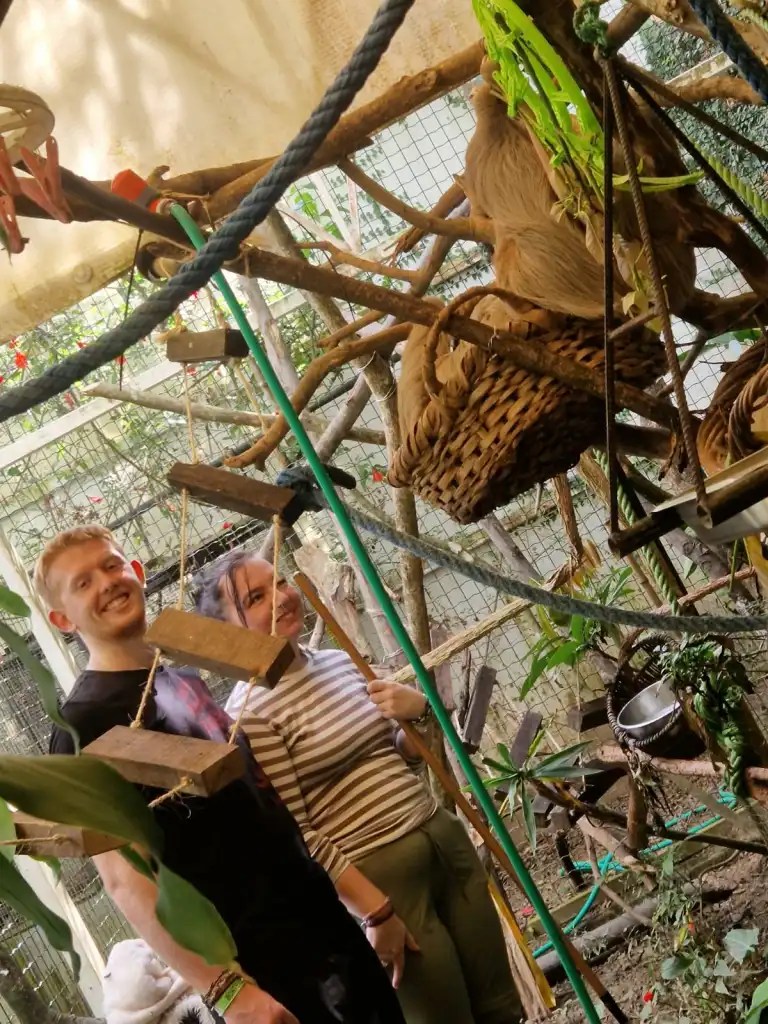
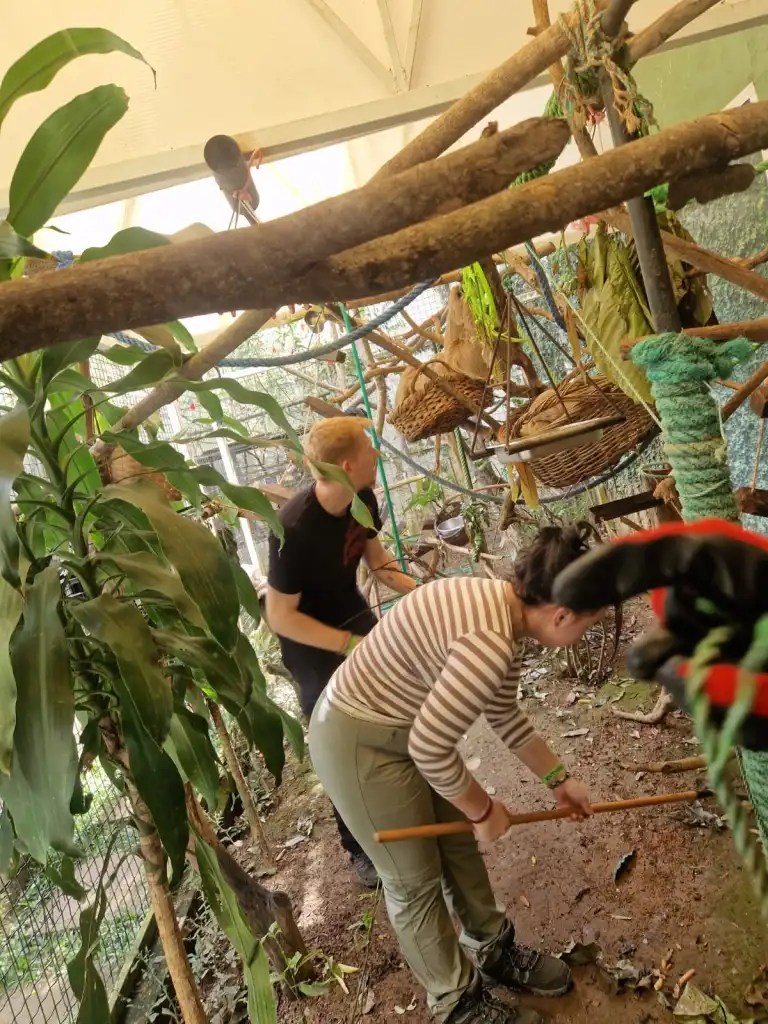
Luckily, Sloth’s are one of the few animals that don’t get imprinted by humans but we still respected their space and admired them from a distance.
Different roles?
The Sanctuary also has other opportunities based on what your interests are. One example being Aimee worked with their marketing team to support their Social Media accounts which was mutually agreed upon before arriving. This meant that she had less physical hours in the day but had social media tasks which she undertook while Jack was working with the animals.
This really helped balance Aimee’s day due to ongoing health conditions she had at the time. The Sanctuary was very supportive of this and would not push any volunteers to do something they don’t want to do.
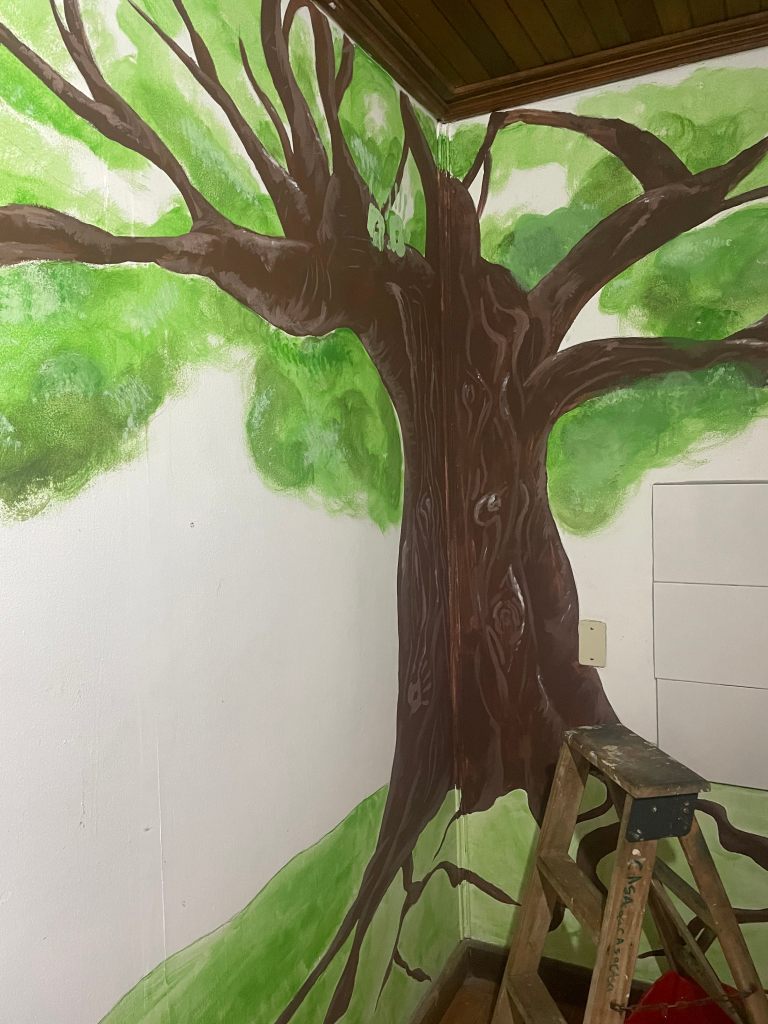
Upon meeting the workers there and the team, Aimee expressed an idea of painting a mural in the living space that can symbolise the sanctuary and all the efforts of each volunteer that has helped.
This was an idea Aimee came up with and on one day in our spare time we headed out to grab some paint with a friend that worked at the sanctuary before starting the next day. Aimee spent the last 2 days sketching and then painting a mural on the wall. As it was at the end of the trip, time was limited but aimee managed to finish it moments before we got in the taxi to leave.
It’s a part of us that is at the sanctuary now and everyone sees when volunteering here! We are so grateful for the sanctuary to allow this and are very supportive in creative new ideas, so what’s to lose. The photo of the tree painting is below – we definitely need to go back and see it soon!
Overview of volunteering at Rescate
The Sanctuary offers such opportunity with volunteering that each day will never look the same. The people are amazing and are super supportive with the volunteers which is really helpful to know. If you are looking to get some experience here towards a career of veterinary then they have a vet program which is working a lot more in the clinic to help with sick or injured animals. You will need some sort of education and knowledge to work here so check the eligibility before applying for this role!
The park is a beautiful place and the activities are so insightful to the simple life of working at a sanctuary. After leaving, Jack would be more than happy working there full-time as a volunteer but maybe another day!
Make sure to check the sanctuary out here as it’s a great place to learn about animals and also learn a lot about yourself. There’s so many amazing memories to have here and will always hold a special place in our hearts.
If you did enjoy the blog and like the idea of volunteering abroad, make sure to drop a like and let us know what you think in the comments below. Also, don’t forget to subscribe so you don’t miss out on our daily blog uploads regarding all things travel!!
Want help planning your Costa Rican adventure?
We now offer custom travel planning support! Experience the pinnacle of travel planning, ensuring your journey is luxurious, well-organized, and unforgettable! Find our Basic package, Standard package, and Luxury package, ready for your Costa Rica trip! We have made a blog post explaining these packages further here!
Our favourite must-needed travel resources
Where to Fly
Trip.com – Find amazing flight deals, with over 2 million flight routes, and being one of the world’s leading online travel agencies.
Kiwi – Use Kiwi’s amazing service that is pioneering in the flight space! They use virtual interlining, which means they can provide seamless connecting flights into one single itinerary!
CheapOair – Being one of the fastest growing online travel companies in the US, CheapOair offers great flight deals, hotel rooms, rental cars and more!
Where to Stay
Booking.com – Offering over 28 million accommodations to book, we will always use booking.com! Having a rewards system built in, the more you book, the more perks you get!
HostelWorld – You cannot budget travel without hostel world! Having over 17,000 hostels, boasting over 13 million reviews, hostel world is one our of top websites for budget travel! They are now offering more ways to meet people abroad, with meet ups, group chats and more available!
Vrbo – Find stunning vacation rentals with Vrbo! Offering over 2 million paid listings in 190 countries, find memorable experiences with this accommodation service!
Where to Explore
Viator – A trip advisor company, viator offers over 300,000 experiences over 200 countries, including water sports, walking tours, boat trips, food tastes tours and more! Including activities for many budgets, check out Viator!
Eat With – Experience authentic travel experiences with locals worldwide! Use eat with to book unique and intimate dining experiences, such as dinner parties in big restaurants, big feasts with a local family, cooking classes with a local and more!
Get Your Guide – Book unique (and common too!) experiences and activities worldwide, including skip the line tickets to big attractions worldwide!
Where to get Connected
Airalo – With over one million people using Airalo, it is our go to eSIM provider for our worldwide trips! Having data packs from over 200 countries, find combined area packages and deals to suit your travel style and data needs!
Where to be Protected
ETKA – Every age from 3 to 85 can buy ETKA’s travel insurance, offering multilingual 24/7 chat support, and your insurance policy within 2-3 minutes!
Our Top Traveller’s Essentials
Backpack – Osprey Farpoint 40 – This backpack is a staple amongst many travellers! Being a lot cheaper than the luxury brands, this is a quality backpack from a well known brand. It boasts quality durability, is lightweight with a great framework and is a great option for most people! This backpack has a hip strap to help carry the bag, a breathable harness strap, and comes in multiple colours!
Compression Packing Cubes – Compression cubes are our favourite packing accessory! These cubes are similar to the normal packing cubes, but feature a compression zip, meaning you can compress your clothes down… this makes packing easier, limits the space you are using, and means more room for souvenirs etc!
Powerbank – Don’t lose power when travelling! It isn’t always guaranteed to find charging ports, so we would always suggest carrying a spare power bank, just incase you do run low on power when you need it!
Universal Travel Plug Adapter – Most backpackers/travellers visit multiple countries during one trip. And that means it isn’t guaranteed you will be using the same plug head during each place. A universal plug is great as it lets you switch between each plug head style all in one item! We love ours, it has USB slots meaning multiple items can be charged at once.
Find our full packing list guide here.
Thank you for reading our Rescate Volunteering Abroad guide!
If you would like to support our own travel Journey, please check out all our other blogs, and subscribe to the newsletter where we are currently uploading daily blogs!
We post weekly Youtube Videos now! Please check out our newest Vlog!
Check out our Social Media’s below! We share our daily activities, all of our budget friendly travel tips, travel inspiration and more!
Finally, share this post with your friends! Let’s build those travel plans and make memories!

 Our Two Step Start
Leave a comment